Monday, 13 February 2017

ROAD SAFETY A MATTER OF PUBLIC IMPORTANCE

Nowadays ,  people are always in a hurry to reach their destination whether it be entrepreneurs going for work or bus drivers taking student to school , young undergraduate rushing to colleges or business employee going to their workplaces. The question arises why does everybody drive in a hurry , the simplest  answer in the  all of we , you and I , leave on homes just to make our visit expected time , not early this “rush in the last home” makes thing go in haphazard manner things go in accidents , collisions and ultimately deaths. “let us beware”
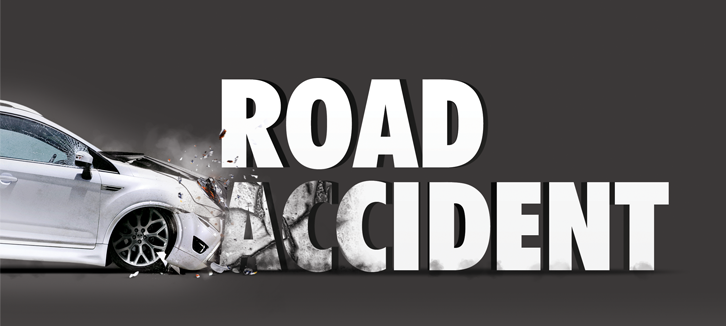
D:\vice city   GTA\road-accident.png

REPORT OF INDIA:
NATIONAL ROAD TRAFFIC INJURY FATALITY RATE According to official statistics 141,526 persons were killed and 477,731 injured in road traffic crashes in India in 2014 (NCRB, 2015). However, this is probably an underestimate, as not all injuries are reported to the police (Gururaj, G., 2006, Mohan, D. et al., 2009). The actual numbers of injuries requiring hospital visits may be 2,000,000-3,000,000 persons. The basis for these estimates is given in later section. The situation in India is worsening and road traffic injuries (RTI) have been increasing over the past twenty years . This may be partly due to the increase in number of vehicles on the road but mainly due to the absence of coordinated evidence-based policy to control the problem. These data show that the number of fatalities has continued to increase at about seven per cent a year over the past decade except over the last couple of years.
Tamil Naidu records the highest road accidents for a decade and its capital Chennai has more accident than any other city

In New Delhi, the capital of India, the frequency of traffic collisions is 40 times higher than the rate in London, the capital of the United Kingdom.[3]
Maharashtra has always highest number of accidents compared to all other states of of India. According to a report Maharashtra had 71550 accidents motor vehicle accidents in year 2000 as per the "IndianStat report - Number of Motor Vehicle Accident In India 1998-2000(State wise)".[1]
Traffic collision-related deaths increased from 13 per hour in 2008 to 14 per hour in 2009. More than 40 per cent of these casualties are associated with motorcycles and trucks. The most accident-prone time on Indian roads is during the peak hour at afternoon and evening.[1]
According to road traffic safety experts, the actual number of casualties may be higher than what is documented, as many traffic accidents go unreported. Moreover, victims who die some time after the accident, a span of time which may vary from a few hours to several days, are not counted as car accident victims.[1]
In 2015, one person dies every 4 minutes in roads accidents in India, according to NGO 'Indians for Road Safety'.[2]
India stands out miserably in the latest World Health Organisation's (WHO) "Global Road Safety Report-2015" with an
This shows we are still a victim of road accidents.
ROAD SAFETY POLICIES IN INDIA
Road safety is emerging as a major social concern in the country and Indian government tackles this crucial issue for several years. The Road Transport and Safety Bill 2014 should provide a framework for safer, faster, cost-effective and inclusive movement of passengers and freight in India. In July 2015, Indian Prime Minister Narendra Modi said his government will soon introduce laws to enhance road safety as traffic fatalities and injuries mount. A new Road Transport and Safety Bill is under preparation and a group of experts underlined the "urgent" need of a comprehensive national road safety legislation.
Embarq India, an initiative from the World Resources Institute (WRI),] has developed significant expertise in conducting road safety audits on a number of bus rapid transit systems in India. Arrive SAFE is a NGO who works as a pressure group to give a wake-up call to authorities concerned and shake the bad driving habits of Indian people. Indian driving schools focuses on youth to enhance the art and skill of efficient driving.
Many multinational companies fund NGOs as part of their own road safety initiatives:
Maruti Suzuki closely works with Ministry of Tribal Development in Gujarat to train young people in driving.
Michelin, co-founder of the Global Road Safety Initiatives (GRSI), has established, in India, an innovative partnership with the foundation of PVR Cinemas, PVR Nest as part of its CineArt "Steer to Safety" program to educate and empower children about road safety. Through this platform, children learn how to prevent and/or manage in emergency situations on Indian roads.
Henkel has launched a road safety initiative in an effort to address the topical issue of safety standards on the road in India
HOW YOUTH CAN CONTRIBUTE:
  • Passenger restraints such as seat belts — often in conjunction with laws requiring their use — and airbags
  • Crash avoidance equipment such as lights and reflectors
  • Driver assistance systems such as Electronic Stability Control
  • Crash survivability design including fire-retardant interior materials, standards for fuel system integrity, and the use of safety glass
  • Speed control in urban areas: maximum speed limits of 50 km/h on arterial roads need to be enforced by road design and police monitoring, and 30 km/h in residential areas and by judicious use of speed-breakers, dead-end streets and mini roundabouts
  • Pedestrian safety regulations for cars to be notified.
  • Youth can also organize awareness campaign:
  • Street Skills : Help teenagers who don't yet have license to become more responsible drivers

“ ALERT TODAY ALIVE TOMORROW“
Bhuvesh Shokeen

Monday, 26 December 2016

WAKE UP, OH YOUTH!

WAKE UP, OH YOUTH!

Road Safety Scenario in India:


India witnesses eighty thousand deaths in road crashes every year, 13% of the total fatality in

world. In 2015 with the number of deaths rose nearly 5% to 1.46 lakh. Major reasons which

account for the mammoth figure are:

  • Driving drunk
  • Using phone while driving
  • Not using pedestrian crossings for crossing roads
  • Rash driving.
  • Low proportion of untrained drivers
  • Lack of positive driving culture


Who can take the Torch Ahead?

India has the world's largest youth population with more than 65% population below the age of 35. In future, policies are going to be made by the youth for the youth. Therefore, youth certainly has a significant role to play in Road Safety due to large proportion in population and high motivation level to bring change into the society.

What youth can achieve?

I had an appalling experience when I saw the video of a child who had just visited Singapore and was fascinated by the Road Safety systems in place. The video can be seen here Road Safety Practices in Singapore and is used by www.publicsafetyindia.com for motivational purpose. The child in the video seems to be determined to change the Road Safety Systems of India.

The child notices:


  • Automatic Pedestrian Road Crossing Signal
  •  Zebra Lines
  •  Drivers as responsible drivers who let the citizen cross the road first
  •  Push Based Signal system for crossing the road

People may reject the determined attitude of the child disregarding as not practical as per Indian context, and emotional approach. In addition, people may say that such big policies makers have failed to bring change, what will this child’s do? But that is where the youth has to change the mindset. Youth is new to the world and therefore has not been gripped by the narrow minded system. Nobody has ever been able to stop new birds from flying just because old ones’ feathers have been cut away due to the dangers. The youth has the power to Create and Innovate; they can develop Analytics based Road Safety systems, Video Analytics for rule violation, Automatic road crossing signals etc. The youth has a Voice; they can help government by identifying risk prone zones, U-turns, dividers across the roads, running road safety promotional campaigns in Colleges and Universities, etc. As said by Swami Vivekananda “What we want are some young men who will renounce everything for country’s sake, the country will be transformed”.


Raghav Ahuja 

Monday, 12 December 2016

CONDITION OF RURAL ROADS


Rural Road connectivity is a key component of rural development, since it promotes access to

economic and social services, thereby generating increased agricultural productivity, non-agriculture

employment as well as non-agricultural productivity, which in turn expands rural growth

opportunities and real income through which poverty can be reduced.

A study (Fan et al. 2006) carried out by the International Food Policy Research Institute on

linkages between government expenditure and poverty in rural India has revealed that an

investment of Rs 1 crore in roads lifts 1650 poor persons above the poverty line. Public investment

on roads impacts rural poverty through its effect on improved agricultural productivity, higher non-

farm employment opportunities and increased rural wages. Improvement in agricultural productivity

not only reduces rural poverty directly by increasing income of poor households, it also causes

decline in poverty indirectly by raising agricultural wages and lowering food prices (since poor

households are net buyers of foodgrains). Similarly, increased non-farm employment and higher

rural wages also enhance incomes of the rural poor and consequently, reduce rural poverty. This

study estimated that while the ‘productivity effect’ of government spending on rural roads accounts

for 24 per cent of total impact on poverty, increased non-farm employment accounts for 55 per cent

and higher rural wages accounts for the remaining 31 per cent. Further, of the total productivity

effect on poverty, 75 per cent arises from the direct impact of roads in increasing incomes, while the

remaining 25 per cent arises from lower food prices (15 per cent) and increased wages (10 per cent).

Similar results are found in other developing countries. The study by the same institute (Fan et al.

2000)) in China revealed that with every 10,000 Yuan (about $1200) spent on rural roads eleven

persons are lifted above the poverty line. Living Standard Survey in Vietnam in 2002 showed that

populations living within 2 km of all-weather roads have lower poverty rates as noted in the draft

Vision Document for Rural Roads, 2006 (MoRD, 2006). Statistical evidence apart, the link between

poverty and lack of accessibility is quite apparent. Nearer home, a household survey (APERP, 1997)

conducted in the state of Andhra Pradesh indicated that the rural road improvements lead to

substantial reduction in freight charges, increase in household income, more employment

opportunities, and expansion of cultivated land as shown in Figures 5.1, 5.2, and 5.3.

STATUS OF RURAL ROADS IN INDIA

Roads are classified under a time-honoured system into National Highways (NHs), State Highways

(SHs), Major District Roads (MDRs), Other District Roads (ODRs), and Village Roads (VRs), with well-

recognized standards for construction and maintenance laid out in respect of each category.

Generally speaking, there are clearly understood demarcations of responsibility in terms of

governmental offices expected to deal with each category. However, while the activity mapping with

respect to NHs and SHs is clear cut, with respect to MDRs, ODRs, and VRs, these distinctions are

blurred. In many states, though PRIs are assigned responsibilities with respect to ODRs and VRs, a

plethora of agencies and line departments undertake formation and repairs of roads. These include

the state government’s PWD wing, the Agricultural Produce Marketing Committees (APMCs),

parallel bodies created by multilateral agencies, Forest department, Development authorities and so

on.

There are several general funds that are used for roads,

apart from special schemes tied to specific road projects.

Saturday, 1 October 2016

Analysis of Delhi roads

It was a nice Sunday morning. I have planned with my frnds to do a road trip. our plan was to do cycling      from lajpatnagar to rashtrapati bhawan.My motive was to analyse the roads of delhi very closely. While passing through the road somewhere near JLN stadium I noticed an accident. It happened previous night. 

It was collision between an auto rikshaw and honda city car.
I stopped my bicycle there and seen that place closely. I also asked few questions related to this from people around there. The answers were quite expecting. It was because driver was not in the real world. May be both of them were fuddled. The auto rikshaw was totally destroyed from the back and the car from the front..IT WAS TERRIBLE..I think they must be knowing that one should NOT drive after drinking alcohol..But who cares?? A proper implementation is necessary. As said by a man the crowd there helped each other and taken the injured persons to nearby health centre.
That man said me something.It was really surprising,i cant imagine that how a person can be like that.Actually he said me that few people there were not helping the needies . They were taking out all the expensive belongings.Though it was noticed only by few people but they have also not reacted there.
#DRUNKandDRIVE IS ALWAYS DANGEROUS..BUT GREED OF MONEY THAT KILLS HUMANITY IS THE DEATH OF MANKIND..
WE SHOULD COME FORWARD TO HELP SOMEONE. NOT TO HELP OUR OWN SELF BECAUSE OF SOMEONE'S HELPLESSNESS.
This  is the story of #Supreet , who went to cycling on 25th oct 2016 .

SUPREET SHUKHLA


Wednesday, 21 September 2016

I lost my brother

One day, you call your cousin (brother) for casual talk, when you are hundreds of kilometres away. Your cousin (sister) picks up the phone only to tell you that he is not at home. You acknowledge and hang up. After a day or two you call him again but he is unavailable as he is at his mausi’s (aunt) house. He is focusing on his studies. You reply with a dry “okay” and hang up. You tried to get his aunt’s number in vain. You chuck away the thought of calling him, thinking you can talk to him when you get home. When the time came for you to go home, you were excited, there was so much to talk about with your brother. But when you got home, you heard the shocking news about him.
This is my story from when I was studying in Kota, preparing for the JEE. The person to whom am trying to reach is my brother Hitesh (Raja), he is of same age as mine so I am a lot attached to him. We spent a lot of time together playing, having fun. I decided to have a conversion with him on a lot of things. As I am heading towards him a new feeling ran in my veins as we will be talking to each other after a long time. My mama ji was there to receive me at the railway stations .After a formal talk he told me that there is something we haven’t told you. I thought it must not be a big thing then he told me that Raja is no more. Suddenly I don’t know what I have heard a few seconds ago. Then I don’t know what happened next but I can’t feel anything next every memory which I have with him comes in my mind. Then I am able to ask a single question how and when. Then he told me, the day when you first call him and we pretend you he is not at home, he met with an accident on bike with a truck. He wass not on the wrong lane but the truck driver lost control, and all this happened. He was not wearing a helmet; his whole body have no major wounds except with a broken neck. He died at the very same moment. He further continued, we once tried to contact you about this but we can’t, fearing what will happen to you when you are at such a large distance. These words broke my heart.
 Sometimes in this time gap I realise that something wrong must have happened but the belief on my family give me always a safe and secure feeling. I lost my brother but don’t want others to lose theirs. It took a lot of time to write such a small portion of my story, whenever I tried to mention my brother’s name, tears starts running from my eyes. It’s been 2 years he is not with us,but we still miss him. I don’t want anything like this happens to anyone.  Always use safety precautions.

Pankaj Yadav ( with Raja)


Monday, 5 September 2016

My Uncle

How does it feel? How does it feel?
It's as if time has stopped. It's as if everything has come to a standstill, and so have you. So much to do, to scream and run and jump, and yet nothing comes out.
It's one of those moments in life. 
I watched, with my two eyes as my uncle rammed his speeding car into a pickup truck, and splinter into millions of pieces and singe, singe in flames. 
We were all returning from a wedding, and my uncle was drunk to the point of oblivion. He got into a huge fight when we asked him not to drive, and finally agreed that he would just bring the car from the parking lot to in front of us, and then my mother could drive us home. 
So my mother and I waited as my uncle came up the road.
He pretty obviously wasn't thinking, for the car was hurtling at an insane speed, and didn't stop where we were standing. My mother yelled at my uncle and ran after the car, while I was numb from the freezing winter, and also shock and bewilderment.
It didn't take long, but felt like an eternity. Suddenly out of nowhere, a mammoth of a truck seemed to emerge on the road right in front of the one my uncle was on.
I could hear anything, nor see anything. My throat was dry, my heart beating wildly. I felt disabled, numb.
Gone. In a matter of minutes, a 35-year-old software engineer in TCS, gone up in flames and splinters. A 35-year-old man who was the light and life of our entire family. All charred and shattered.
I still have no idea what I was thinking back then, looking at my mother's silhouette, the car in flames, people rushing about, clutching their sweaters and shawls, light, noise, death surrounding us. I certainly felt the bite of the cold set in, piercing my flimsy clothing material - but no. My uncle couldn't die, could he? I swallowed, watched my mother and the slowly-growing crowd. 
In a matter of a while, my uncle's family was torn asunder. His wife and daughter moved to Chennai to live on their own, far from the place which served to remind them of that accident day after day, night after night.
Perhaps this is nothing compared to what people have suffered in road accidents. But yeah, road accidents shouldn't be happening. It's something seriously messed up if we're developing at such an accelerated rate, and continue losing people to brutal road accidents. My uncle isn't going to come back to us, anyway.

Anjali Bhavan

Saturday, 27 August 2016

ONE NIGHT.....

Many times we hear about the innumerable cases of road accidents and road safety as an imminent and important issue. Without giving it a close attention, nor having a soft heart towards it, personally speaking, I was never so much exposed to road incidents or the extent to which it could damage and transform lives.  One incident that happened with my family really slipped the ground under my feet. It happened in the mid of November when my maternal family went to a small district in Uttar Pradesh to attend a wedding function. Everything was jolly in the midst of celebration with pomp and show, when their world turned upside down while returning from the function.  The catastrophe took place around 11 o’clock in the night when my uncle who was driving the car crashed into another speeding car which had three boys who were drunk. My uncle tried his head and heel to manage the speeding car but it came to a halt and the windows including the glass panes were shattered as if somebody had crushed it between the palms of his hands. It was a dreadful and the most horrifying accidents I have ever heard about. My whole maternal family was in the car. Everyone was unconscious and lying on the road. Everything was collapsed including the seats and the other setup in the car. My aunts and uncle had lost consciousness. The whole family was broken and everyone was in the worst phase of their life that they little knew in unconsciousness. We, as an immediate family, provided them all the help they required. We understand the importance of something as we ourselves suffered of that condition. In the other car, the two youngsters were dead on the spot and one was in the most dreadful condition. That moment I realized the plight of the people who are lying on the road and how their eyes give shrill cries for help. I decided and took an oath to help people in spreading the message of road safety. ‘Indian road safety campaign’ came as a shining light in my drowsy path and it helped me to spread awareness and work for the same. It made me realize that it’s not a small issue anymore as it causes dreadful and unexpected deaths than any other issue, be it a terrorist attack or a natural disaster. Here, people can save their lives and others lives by being more attentive on what’s happening on the road and following some precautions. The need of the hour is that children from a young age should be taught about road safety and its effects in the long run. School teachers and parents should teach them about it and they should also have some practical and sound knowledge. For example, crossing the road, walking on footpaths, using zebra crossing and traffic lights for crossing the road, avoiding drink and drive and being patient and attentive while on or either sides of the roads.


TUBA ALI